

Always One Grade Ahead
an analysis on aging, maturity, education, the workforce, and the bodily rainbow

I’ve been very self-aware of how I’ve responded to the differing levels of the school system, especially because I was inducted into the gifted program in the third grade, doing high-school level work in middle school, college-level work in high school, and feeling unchallenged in college. Exacerbated by the fact that I completed my bachelor’s degree a year earlier, my current pursuing of my master’s degree feels like I’m doing run-of-the-mill work for a discipline I’m already getting on-the-ground experience on. My last semester was life-changing because not only was I learning new things when it came to teaching students, grading assignments, and learning about the Caribbean subjectivity through rhetorical analysis, I had beautiful relationships with my teachers. In this current semester, I’m experiencing something akin to burnout, but somehow more numb, more vacuous, more superficial. However, a woman in my American Literature class touched on a very important point when our class had a break, and that is the fact that students are pushed into these AP classrooms or IB programs or higher-level curricula by schools so as to accrue more economic capital and prestige. Merging this with my own subjectivity regarding more demanding scholastic education, I realize that I didn’t get a chance to fully enjoy high school—or middle school, or half of elementary school if I’m going to be honest. I was pushed into advanced classes, stuck with the same children in my most formative years, and forced to reckon with harder material that I wasn’t ready for; while it has aided me in trying to find the challenges in life, it’s hindered my ability to sit in a class that is actually at what is supposed to be my level of education. I shouldn’t be bored out of my mind in a graduate-level class. I should feel confused and want to learn more. However, I go into these classes not feeling pushed to learn, not feeling embodied by what is supposed to be new information. My brain was going through all of this work, all of this stress, all of this confusion while also handling puberty and interpersonal issues at such a young age, and I can’t help but look back on those years and ache and hold my heart like it’s been bruised, because that younger version of me went through so much to just get through high school and live to tell the tale.
On the positive side, my hard work paid off and most of my undergraduate career was financially handled due to me qualifying for grants and scholarships by the time I got my yearbook full with “HAGS” messages and scribbled well wishes. However, I can’t help but think of having children and them possibly being informed about the gifted program or AP classes and them being so excited about someone thinking that they’re smart and special and important and me having to break their hearts because I can’t bear to put my children through that. I was forced to grow up really early and develop more adult-like sensibilities before my family jewels dropped, and I attribute some of that to my accelerated schooling. When you’re on this conveyor belt, you get sold this dream of covered college and easier access to the workforce and proximity to self-determination, independence, and the socioeconomic complex we know as the American dream—however, when you get it peddled to you during your single-digit years, you’re forced to reckon with this idea that being eight is somehow pathetic and should be beneath you. Why be a kid when you can be “smart?” It implies that children that are in standard levels are incapable of thinking outside the box or engaging with higher-order material, while also implying that children can’t be present in their youth and simultaneously interact with literature or algebra or chemistry. We discard the beauty of being a kid for AR scores, ReadingPlus, timed times table quizzes, not needing to study because we’re “too smart for that”; thus not only disrespects the human condition but also inhibits necessary growth for children. Furthermore, this conveyor belt holds some parallels to how the military will prey on high school students due to the benefits and “adventure” they advertise. If I can place the public school system next to the military and see intersections in how they treat the vulnerable and ambitious, there’s a problem.
There’s another side of this argument that I want to explore (which partially came from watching Degrassi: The Next Generation for the umpteenth time, but I digress), which is the idea that this accelerated scholastic development is great for those who have big dreams and want to enter the workforce headfirst, and if there are some who can’t handle the pressure, it’s not the system at fault. Engaging with this concept is interesting, because since I did “handle the pressure,” I should feel fulfilled, no? I should feel proud that I withstood the heat, and am currently at the helm of the kitchen. However, I instead feel cheated. I feel like I lost out on large parts of my childhood because I was ahead of the curve, and I’m currently feeling like I’m losing out on being a young adult by pursuing my master’s degree. I should be shaking my ass at the club! I should be working some mid-level job for spending cash! I should be drinking and dating and debating with my friends about stupid topics and hot guys and sexual positions and instead I’ve devoted the next year to teaching students who are basically in the same stage of life as me. I’m living the life and paying the bills of a thirty year old, and to feel primed for what? Capitalism? Despite my complaining, this is also a life path that I chose, and one that I don’t regret. I like teaching rhetoric to freshmen. I like engaging with faculty and wrestling with big topics. I like being in academia and feeling nourished by conversation and analysis. I love feeling small and learning new things—in some ways, I feel like a child again. However, this juvenile subjectivity clashes with this almost senile vacuity I experience, and suddenly it feels like adolescent puberty all over again. I find myself giggling over cute classmates and catching glances and feeling nervous in front of teachers like they have a desire to crush me and throw me away. I feel disposable. However, this emotion of defiant permanence finds a way to seep through my cracks and find a way into my soul. I feel as if I belong everywhere, as if I attract everyone, as if I change all. I feel like God and the Devil and Adam and Eve and the serpent and the blind man all at once. I feel like so many people in so many situations, which makes me question: what feels like me?
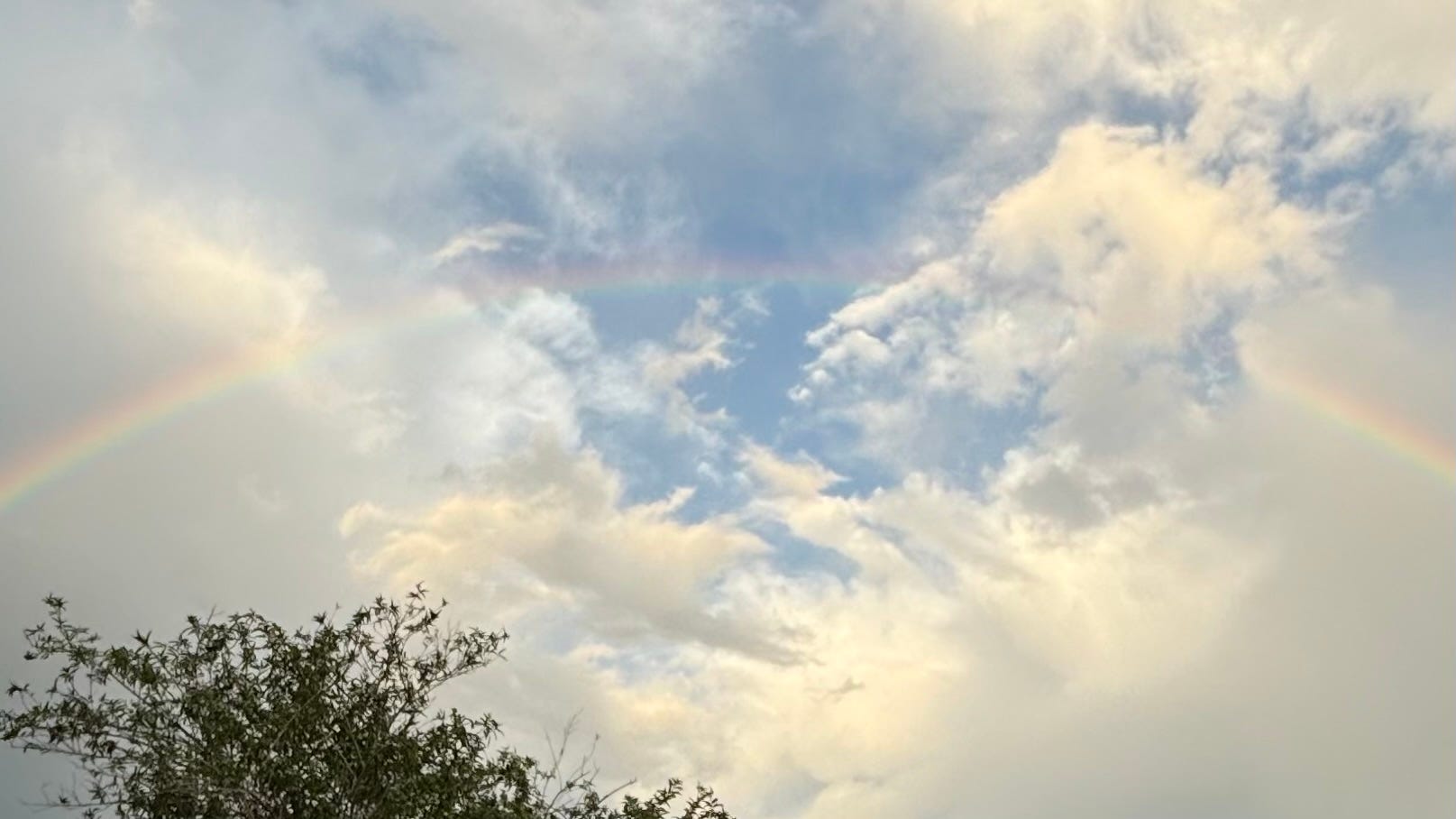
My accelerated learning having an effect on my self-discovery was unprecedented, but so, so incredibly welcome. I feel more in my body this year, and I’m engaged in extracurricular projects that urge me to explore myself and the world around me more intimately and intentionally. Furthermore, I’ve allowed myself to take breaks and to forgive myself for the so-called sins of sleeping in and spinning around in my room to my favorite songs. They inform my work and give it air, and they allow me to feel like a real twenty-one-year-old. I get to stand back and look at the things I’ve done and things I can do. I can make music and draw and write poems and take photos and direct films and build schools and make people smiles and inflame the lusts of guys my age and hold onto my sisters’ hands, and it’s all okay. To answer the last question, what feels like me is a rainbow of behaviors. I can have an emerald breastplate and feel emboldened to ask about a guy’s interests and want to make him smile, I can have violet bends in my hands and feet and feel like they have wings, like I’m going to fly if I don’t tie myself to the ground, I can have a blue-black vortex on my back and think on my feet to assuage that feeling of entrapment, to find a way out, to unlock the padlock with nothing more than grit and a hairpin and an AirPod—I can have it all, and I don’t have to force out 4,000 words a week or overwhelm myself with bimonthly digital volumes, because then that rainbow is desaturated. This distance has given me so much cerebral material to work with, and because of that HALOZINE is going to be so much bigger and better this year. It’s like the best kind of end-of-elementary school project I’ve ever had, the most beautiful variety show I’ve ever participated in, a science fair of the dreamiest proportions. How lucky am I to be a time traveler? But, reader, look at these wounds on me. These may be scars I’ve learned to be happy with, but they still came from pain. What I do with these is up to me, but please do not ignore them. The ends do not always justify the means. While I’m happy now, I deserved to be happy forever. I still do. I deserve vibrancy. And nine-year-old and fourteen-year-old and nineteen-year-old me deserved that rainbow too. I’m finally finding it now, and I can be happy about that now. But I can’t ignore the many years it was ripped from me or the times I spent it for sleepless nights trying to study for tests. I will hold onto it as long as I can. That, reader, is a promise. One that is unbreakable.